Editorial content
165 US articles, including a 19-piece “Myth or fact” series that checks viral TikTok and Instagram health trends against research.
We built and launched WellDay.Media, a consumer health publication for US readers that turns peer-reviewed research into plain-English guidance on the six pillars of lifestyle medicine. Strategy, editorial, design, illustration, SEO and engineering, end to end.
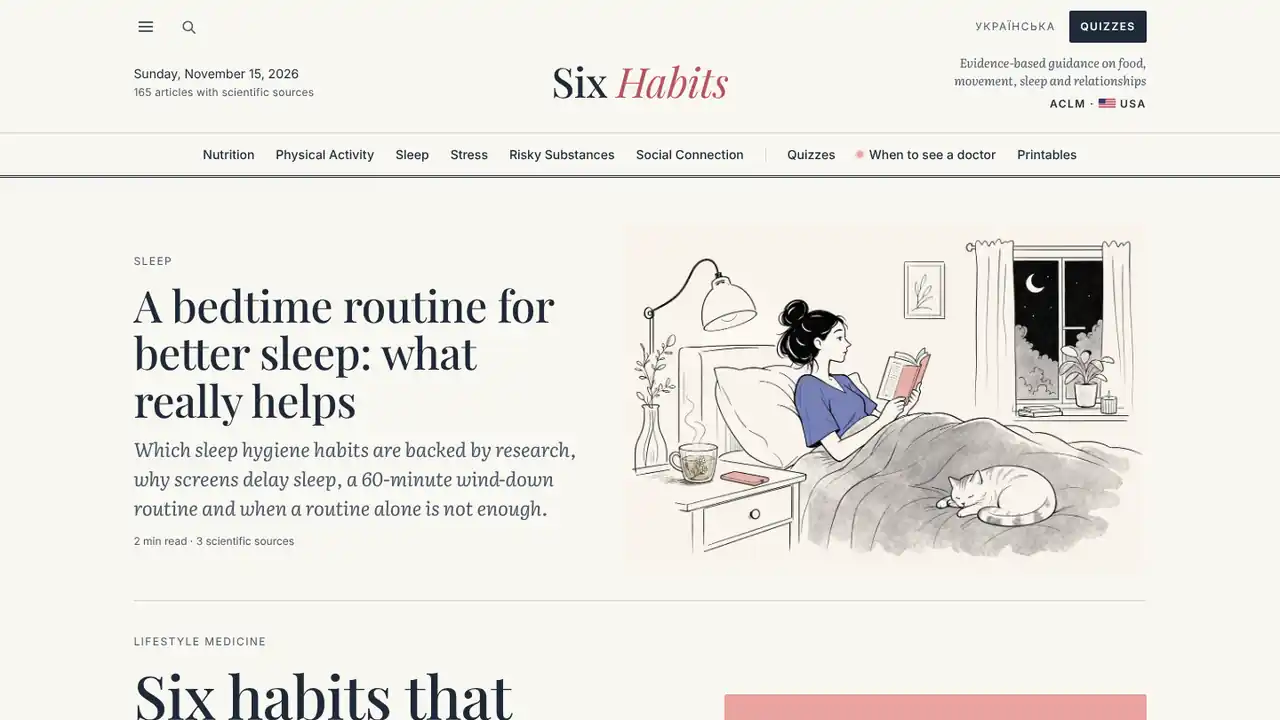
American readers are surrounded by health content, much of it supplement marketing, wellness trends and viral claims. In a category Google treats as “Your Money or Your Life”, a new publisher has to earn trust before it can earn traffic. The site also had to rank in Google, be quoted by AI assistants, speak US healthcare and run with near-zero hosting cost.
We treated the site as an editorial product with a scientific method, not a blog. The six pillars of the American College of Lifestyle Medicine became the information architecture. Advice follows US federal guidelines with US units, every relevant page carries US crisis lines, and every article opens with a short answer, then the evidence, a “when to see a doctor” block, an FAQ and DOI references.
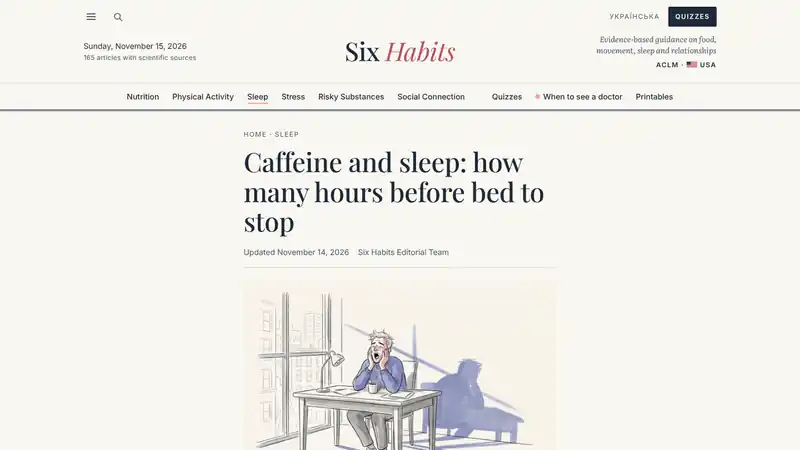
165 US articles, including a 19-piece “Myth or fact” series that checks viral TikTok and Instagram health trends against research.
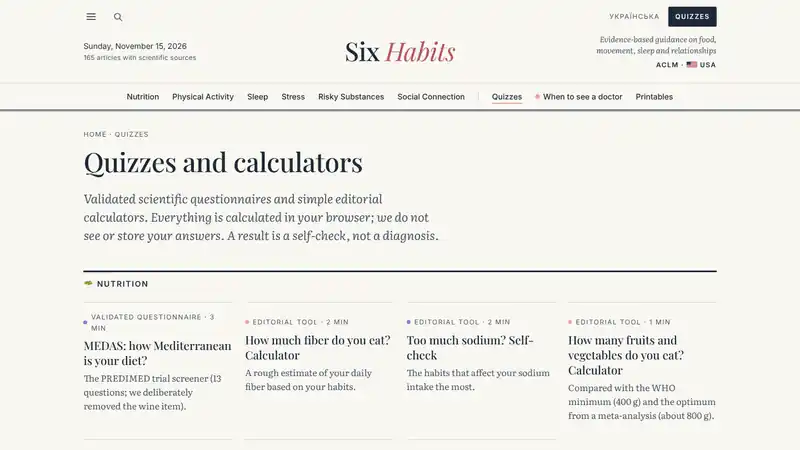
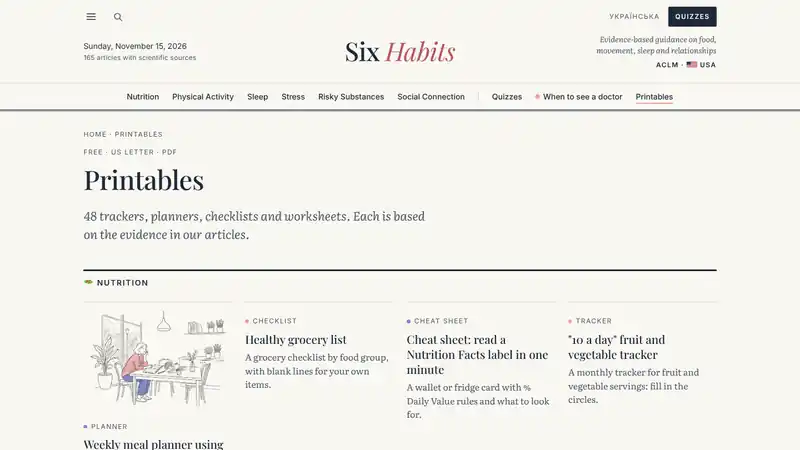
42 quizzes and calculators with 988 crisis messaging where results call for it, plus 48 print-ready PDFs.
A magazine layout with a dated masthead, sticky navigation, a lead story that changes on every visit and a card grid.
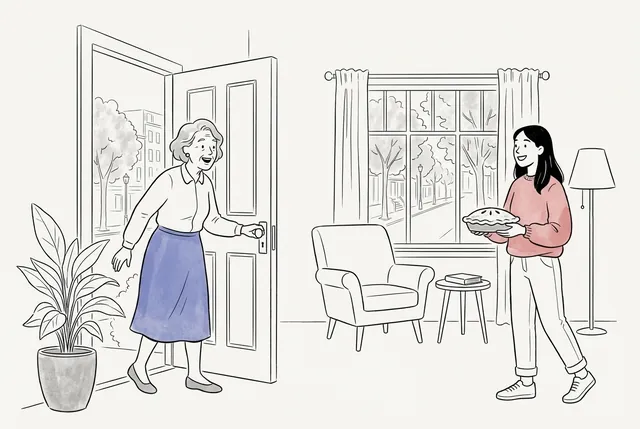
92 covers in one ink-and-watercolor house style, generated from a single style reference and checked by eye.
JSON-LD on every page type, hreflang, sitemap, 332 share cards, llms.txt and llms-full.txt for AI assistants.
An Astro static site with private client-side search, deployed automatically from GitHub to Cloudflare Pages.
Every cover follows the same ink-and-watercolor style. Images with a stray logo or an unsafe pose were regenerated before launch.


In YMYL health content one wrong citation costs more than ten missing articles, so checks run inside the pipeline, not at the end.
The launch runs from mid-November to mid-February, when Americans are most open to new habits. These are the plan and its targets, not results yet.
Domain move, Search Console and Bing, privacy-friendly analytics, newsletter and channels, and a 50-question AI visibility baseline.
A “30 days, six habits” campaign built on the printables, a Dry January hub, Pinterest boards and outreach to US partners.
A February heart health series, media pitches, article refreshes and US-licensed clinicians as medical reviewers.
The US edition is live with 165 articles, 42 tools and 48 printables, 660 pages across both editions, every reference checked against Crossref. We will update this case with real traffic, subscriber and AI-citation numbers at day 90.
The same system is available to companies entering the US health and wellness market: an evidence-first editorial format, a content pipeline with source verification and a repeatable process for on-brand illustration.
Tell us about your market and audience. We’ll suggest a format, a content plan and a realistic timeline.